
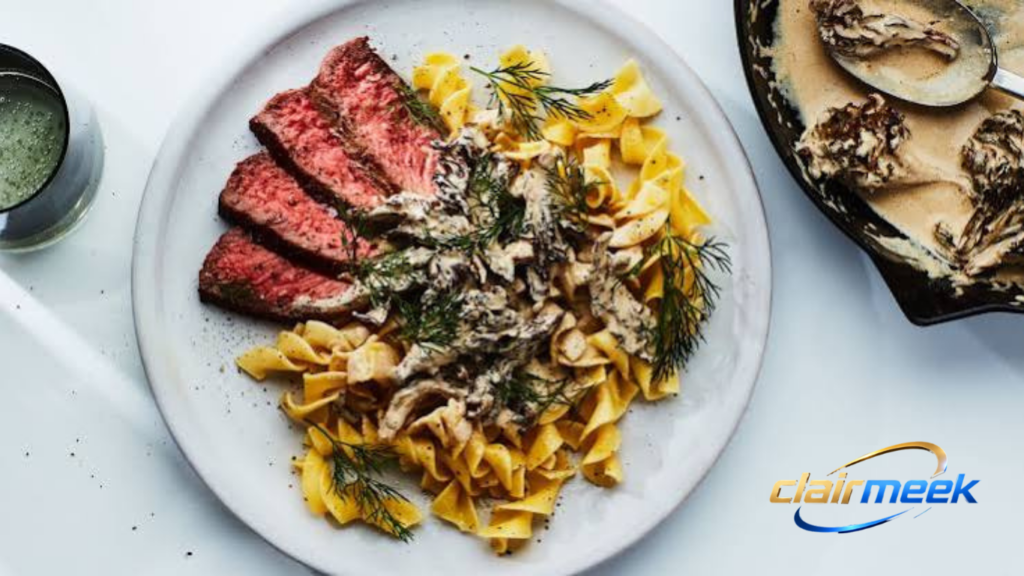

Few dishes manage to feel both elegant and deeply comforting at the same time. Beef stroganoff sits firmly in that category. Thin strips of tender beef, earthy mushrooms and a silky, slightly tangy sauce come together in a meal that has travelled from aristocratic Russian tables to family kitchens and restaurant menus across the world. Today the beef stroganoff recipe remains a favourite for weeknight dinners and special occasions alike, valued for its rich flavour and relatively straightforward preparation.
Readers keep returning to this dish not only for its taste but for the story behind it. What began as a refined take on French cooking techniques blended with Russian ingredients has evolved through wars, emigration and changing food trends. Whether served over egg noodles, rice or mashed potatoes, a well-made beef stroganoff delivers satisfaction that feels timeless.
Early Origins and Background
The dish takes its name from the wealthy and influential Stroganov family of Imperial Russia. Exactly which family member inspired the name remains a matter of debate among food historians. Some accounts point to Count Pavel Alexandrovich Stroganov (1774–1817), a diplomat and general, while others mention different relatives. What is clearer is that the earliest known printed recipe appeared in Elena Molokhovets’s influential Russian cookbook A Gift to Young Housewives in 1871. That version called for cubes of beef seasoned with allspice, quickly cooked in butter, then finished in a simple sauce of mustard, broth and a modest amount of sour cream. Onions and mushrooms were absent.
A French chef named Charles Brière, working in St Petersburg, later entered a version of the dish into a culinary competition in 1891, which helped popularise the name “beef Stroganoff.” The combination of French technique and Russian ingredients, particularly the use of sour cream (smetana), defined the dish from the start. After the Russian Revolution of 1917, the recipe travelled with émigrés, first finding a strong following in Shanghai and later spreading more widely.
Rise to International Fame
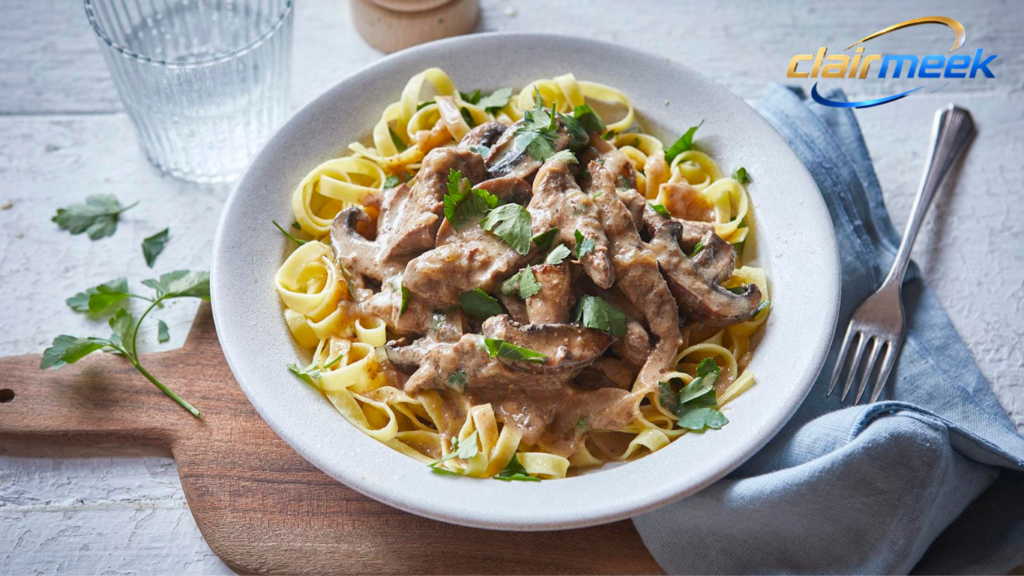
Beef stroganoff reached English-language cookbooks in the early 1930s, appearing in Ambrose Heath’s Good Food in 1932. In Britain it became especially popular from the 1950s through the 1970s, turning up at dinner parties and on restaurant menus. In the United States it enjoyed a similar mid-century boom, often served over egg noodles. Over time the original mustard-forward sauce softened into the creamier, mushroom-rich version most people recognise today. Mushrooms, onions and sometimes paprika or a splash of wine became standard additions.
The dish’s reputation has shifted with the decades. At its peak it represented sophisticated home cooking; later it became associated with ready meals and canteen fare. In recent years cooks have rediscovered it as a proper from-scratch comfort food that rewards careful technique rather than long hours of simmering.
Challenges and Turning Points in the Recipe’s Journey
Like many classic dishes, beef stroganoff has faced periods of decline. Overcooking the beef turns it tough, and adding cold sour cream straight into a boiling sauce can cause the mixture to split. These practical pitfalls, combined with the rise of quicker or more “modern” recipes, pushed the dish out of fashion for a time in some countries. Yet its core appeal—quick-cooking tender beef in a luxurious sauce—has ensured repeated comebacks. Contemporary cooks have also adapted it for different diets and budgets, creating versions with chicken, mushrooms only, or slower-cooked tougher cuts of beef.
What Makes a Great Beef Stroganoff Today
A successful beef stroganoff recipe hinges on a few key decisions. The cut of meat matters. Tender, well-marbled options such as rib-eye (scotch fillet), sirloin or fillet work best because they need only a brief sear. Slice the beef thinly against the grain so it stays tender. Cook it in batches over high heat for no more than 30–60 seconds per side; the residual heat and short time in the finished sauce will finish the cooking without drying the meat.
Mushrooms should be browned properly rather than steamed. Onions or shallots provide sweetness. The sauce traditionally builds on a light roux or simply reduced stock, finished with Dijon or English mustard for sharpness and full-fat sour cream or crème fraîche for body and tang. Adding the dairy off the heat or tempering it prevents curdling. Many British versions favour crème fraîche for a slightly thicker result that holds up well.
Classic Beef Stroganoff Recipe
Serves 4
Prep time: 15 minutes
Cook time: 25 minutes
Ingredients
- 600 g beef rib-eye or sirloin, trimmed and sliced into thin strips
- 2 tbsp sunflower oil or light olive oil
- 40 g butter
- 1 large onion, thinly sliced
- 300 g chestnut or button mushrooms, sliced
- 2 tbsp plain flour
- 500 ml good beef stock
- 1 tbsp Dijon mustard
- 150 ml full-fat sour cream or crème fraîche
- Salt and freshly ground black pepper
- Fresh parsley or chives, chopped, to serve
To serve: buttered egg noodles, rice or mashed potatoes
Method
- Season the beef strips lightly with salt and pepper. Heat 1 tablespoon of oil in a large frying pan over high heat until shimmering. Add half the beef in a single layer and sear for about 30 seconds per side until browned but still pink inside. Remove to a plate and repeat with the remaining oil and beef. Set aside.
- Reduce the heat to medium. Add the butter to the same pan. Once melted, tip in the onion and cook for 4–5 minutes until softened. Add the mushrooms and cook for a further 6–8 minutes until they release their liquid and begin to colour.
- Sprinkle over the flour and stir for one minute. Gradually pour in the stock, stirring constantly to avoid lumps. Bring to a simmer and cook for 3–4 minutes until slightly thickened. Stir in the mustard.
- Return the beef and any resting juices to the pan. Warm through gently for 1–2 minutes; do not boil hard. Remove from the heat and stir in the sour cream or crème fraîche until smooth. Taste and adjust seasoning.
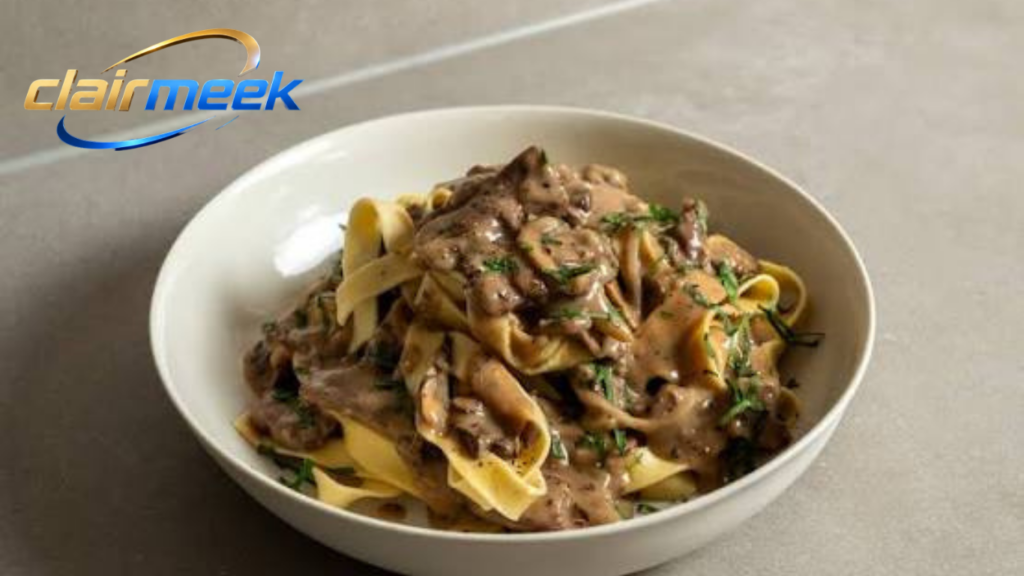
- Serve immediately over your chosen accompaniment, scattered with herbs.
Variations and Practical Tips
For a richer flavour some cooks deglaze the pan with a splash of brandy or white wine before adding the stock. Paprika adds gentle warmth and colour, a nod to later adaptations. If using a cheaper cut such as chuck, a longer, gentler braise works better; brown the meat, then simmer in stock until tender before finishing with the dairy.
Ground beef versions make an economical midweek alternative. Vegetarian adaptations rely on generous mushrooms, perhaps with a little smoked paprika or soy for depth. To keep the sauce stable, always use full-fat dairy and avoid boiling once it is added. Leftovers reheat gently with a splash of stock; the flavours often improve overnight.
Quick Facts
| Detail | Information |
| Origin | Russia, 19th century |
| First published recipe | 1871 (A Gift to Young Housewives) |
| Named after | Stroganov (Stroganoff) family |
| Core ingredients | Beef, sour cream/mustard sauce, later mushrooms |
| Traditional accompaniment | Rice, potatoes or egg noodles |
| Peak popularity (UK) | 1950s–1970s |
| Modern status | Enduring comfort classic |
Conclusion
The beef stroganoff recipe endures because it balances richness with brightness. The mustard and sour cream cut through the meat and mushrooms, preventing the dish from feeling heavy. Its relatively short cooking time makes it accessible, while the technique of searing and finishing carefully rewards attention. Across cultures it has been reinterpreted without losing its essential character—a creamy, savoury celebration of beef.