
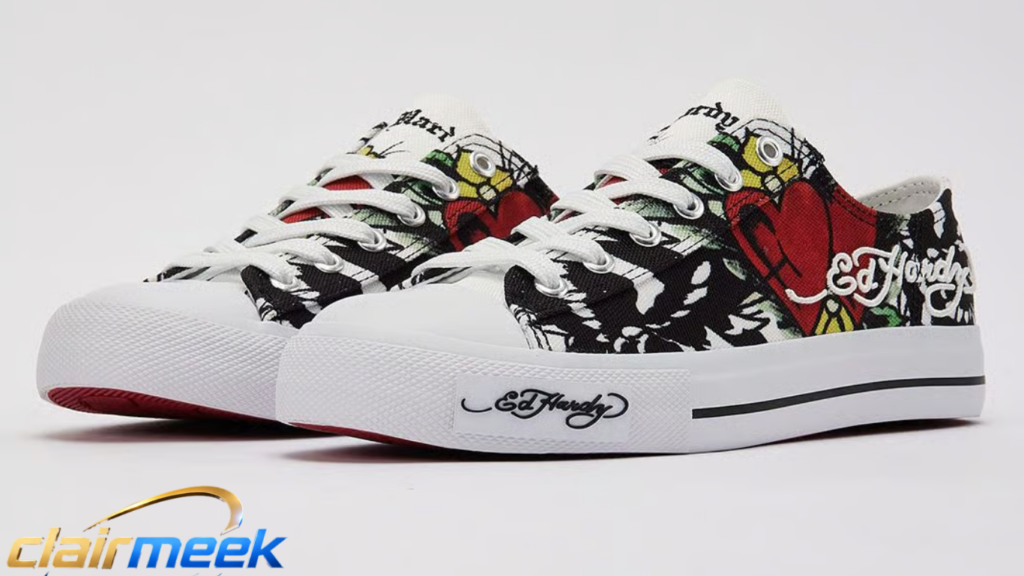

Ed Hardy shoes burst onto the fashion scene in the mid-2000s as part of a vibrant, unapologetically flashy movement that blended tattoo artistry with everyday wear. These distinctive sneakers, boots, and sandals, adorned with intricate designs inspired by traditional American and Japanese tattoo flash, captured the imagination of celebrities and style enthusiasts alike. From rhinestone-encrusted high-tops to canvas lows featuring dragons, skulls, and roses, Ed Hardy footwear embodied a rebellious, larger-than-life aesthetic that defined an era of Y2K excess and celebrity-driven trends.
Decades later, the shoes continue to intrigue new generations rediscovering 2000s nostalgia. Whether worn as a statement piece or a nod to vintage streetwear, Ed Hardy shoes represent more than just footwear—they symbolise the fusion of fine art, counterculture, and commercial savvy that propelled one of the most polarising yet iconic brands of the early 21st century.
The Roots of Ed Hardy: From Tattoo Studio to Fashion Phenomenon
Don Ed Hardy, the visionary behind the brand, was born Donald Edward Talbot Hardy on 5 January 1945 in Des Moines, Iowa. He grew up in Corona del Mar, Newport Beach, California, where his fascination with tattoos began early. As a child, he drew designs on friends using pens and coloured pencils, captivated by the tattoos of returning servicemen.
Hardy pursued formal art training, graduating with a Bachelor of Fine Arts in printmaking from the San Francisco Art Institute in 1967. He declined a scholarship to Yale’s MFA programme to apprentice as a tattoo artist, later studying in Japan with master Horihide in 1973—the first Westerner to do so. This cross-cultural influence shaped his distinctive style, blending bold American traditional motifs with intricate Japanese techniques. He opened Realistic Tattoo in San Francisco, pioneering custom, fine-art tattoos and elevating the craft’s status.
Hardy’s transition into fashion began in the early 2000s when he licensed his artwork to clothing producers. French designer Christian Audigier played a pivotal role, launching the Ed Hardy clothing line around 2004–2005. Audigier’s marketing genius—dressing celebrities and amplifying the “tattoo lifestyle” vibe—turned Hardy’s art into a global commercial success, extending naturally into accessories and footwear.
The Rise of Ed Hardy Shoes in Pop Culture
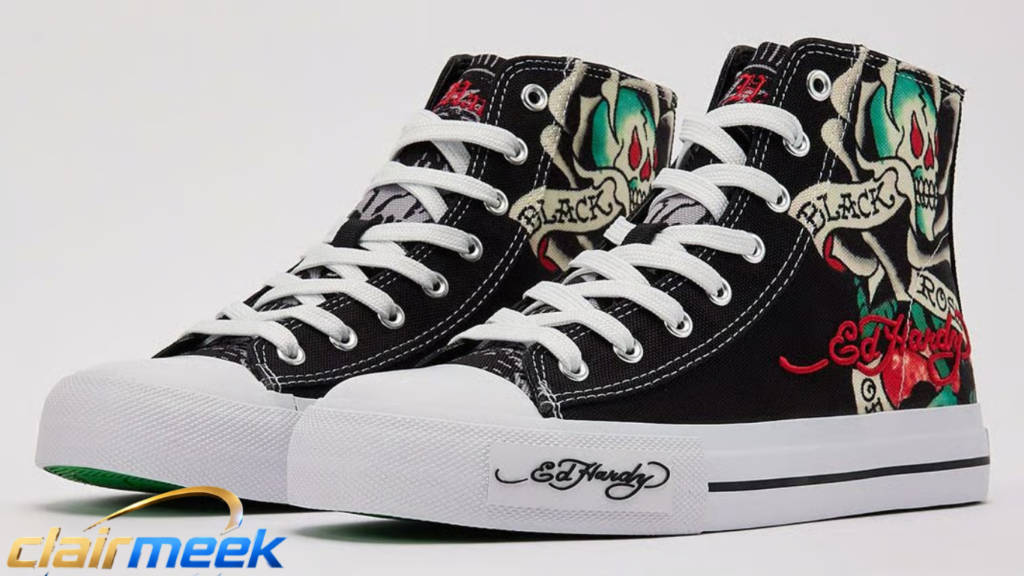
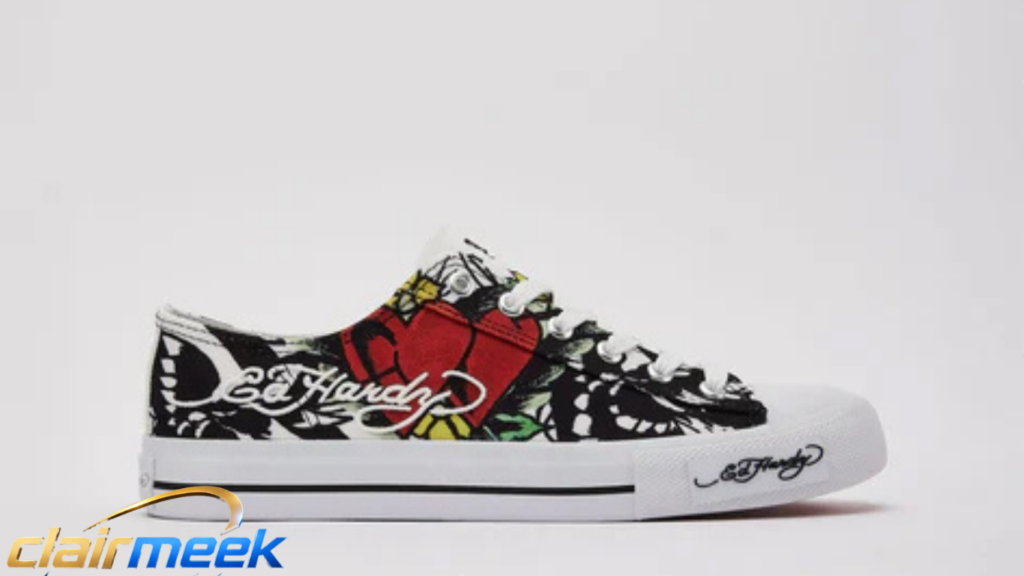
Ed Hardy shoes emerged as a key extension of the brand’s aesthetic during its peak popularity in the late 2000s. Models ranged from laceless tennis shoes and high-top sneakers to boots and flip-flops, all featuring vibrant prints of tattoo flash: geishas, dragons, hearts, and phrases like “Love Kills Slowly.” Rhinestones, metallic accents, and bold colours made them instantly recognisable on red carpets and in nightclubs.
Celebrities such as Paris Hilton, Britney Spears, and Justin Timberlake helped propel the brand. Ed Hardy shoes became synonymous with the era’s flashy, ostentatious style—often paired with trucker hats and graphic tees. At its height, the brand generated hundreds of millions in sales annually, with footwear contributing to its broad appeal across apparel, accessories, and lifestyle products.
The shoes were not just trendy; they represented a democratisation of tattoo art. Wearers could sport intricate designs without committing to permanent ink, making Ed Hardy footwear an accessible entry point into the brand’s rebellious world.
Challenges and the Brand’s Evolution
Like many 2000s phenomena, Ed Hardy faced backlash. By the early 2010s, the brand’s overexposure led to associations with “douchebag” culture and fast fashion excess. Oversaturation, combined with business disputes—including a 2009 lawsuit between Hardy and Audigier over royalties—contributed to a decline in mainstream popularity.
Christian Audigier passed away from cancer in 2015 at age 57. In 2011, he had sold the Ed Hardy label to Iconix Brand Group for around $62 million, with Don Ed Hardy retaining a minority stake. The brand experienced a quieter period but never disappeared entirely.
Personal Life and Artistic Integrity
Don Ed Hardy has maintained a relatively private personal life focused on his art. He and his wife, Francesca Passalacqua, have collaborated on publications through Hardy Marks, producing books on tattoo history and alternative art. They divide time between Honolulu and the San Francisco Bay Area, where Hardy continues mentoring artists at Tattoo City studio.
Hardy has distanced himself somewhat from the commercial excesses of the fashion line, emphasising his roots in tattooing as a legitimate art form. He has expressed pride in his work’s influence while acknowledging the brand’s journey.
Later Years and Resurgence of Ed Hardy Shoes
In recent years, Ed Hardy has enjoyed a notable revival, driven by Y2K nostalgia and Gen Z’s embrace of maximalist, ironic fashion. The brand relaunched in Europe in 2018 and held its first fashion show in Los Angeles in 2024. Footwear remains prominent, with new iterations of canvas sneakers, high-tops, and boots featuring updated colourways and classic motifs.
Today, Ed Hardy shoes appear in collaborations, online stores, and vintage markets. The brand continues to expand into categories like eyewear, fragrances, and more, while honouring its tattoo heritage. Don Ed Hardy, now in his eighties, remains an influential figure in tattoo culture, with his original artwork celebrated in galleries and exhibitions.
Quick Bio
| Detail | Information |
| Full Name | Don Ed Hardy (brand: Ed Hardy) |
| Date of Birth | 5 January 1945 |
| Place of Birth | Des Moines, Iowa, USA |
| Nationality | American |
| Profession | Tattoo artist, printmaker, painter; brand founder |
| Years Active | 1960s–present (tattooing); 2000s–present (fashion) |
| Known For | Tattoo art, Ed Hardy fashion line including shoes |
| Estimated Net Worth | Not publicly confirmed (brand sales historically high) |
Legacy and Lasting Impact
Ed Hardy shoes endure because they capture a specific cultural moment while transcending it. Don Ed Hardy’s work helped transform tattooing from a marginalised practice into a respected art form, and the fashion extension brought that energy to the masses. Though tastes evolved, the brand’s influence on streetwear, celebrity culture, and bold self-expression remains evident in today’s eclectic fashion landscape.
Conclusion
The shoes teach lessons about trends’ cyclical nature, the power of artistic licensing, and balancing commercial success with creative integrity. In an age of minimalist sneakers, Ed Hardy’s maximalist designs offer a refreshing counterpoint—reminding us that fashion can be fun, personal, and artistic.
Ed Hardy shoes continue to walk a unique path, from tattoo flash to global runways and back again. Their story reflects the enduring appeal of rebellion wrapped in art.