

The disappearance of 23-year-old Dail Dinwiddie from the Five Points area of downtown Columbia more than three decades ago remains one of South Carolina’s most haunting and enduring cold cases. Her story isn’t just a missing persons file gathering dust in a cabinet — it’s a living, breathing wound in the hearts of her family, her friends, her community, and every investigator who has ever taken her case seriously. Well, the truth is, Dail Dinwiddie is not forgotten. She never has been, and if the army of devoted truth-seekers surrounding her case has anything to say about it, she never will be.
This article takes a deep, detailed, and compassionate look at everything we know — and don’t know — about Dail Dinwiddie: who she was, what happened on that fateful September night, what investigators have uncovered over the decades, and why this case still matters today.
Who Was Dail Dinwiddie?
Before diving into the mystery itself, it’s important to understand who Dail Dinwiddie was as a person. She wasn’t just a name on a missing persons poster — she was a bright, creative, and deeply loved young woman.
Dinwiddie was a graduate of Heathwood Hall Episcopal School and held an art history degree from Randolph-Macon Women’s College (now coeducational and called Randolph College). She was planning on enrolling at the University of South Carolina for graduate school at the time of her disappearance.
- Age at time of disappearance: 23 years old
- Hometown: Columbia, South Carolina
- Field of study: Art history and fine arts
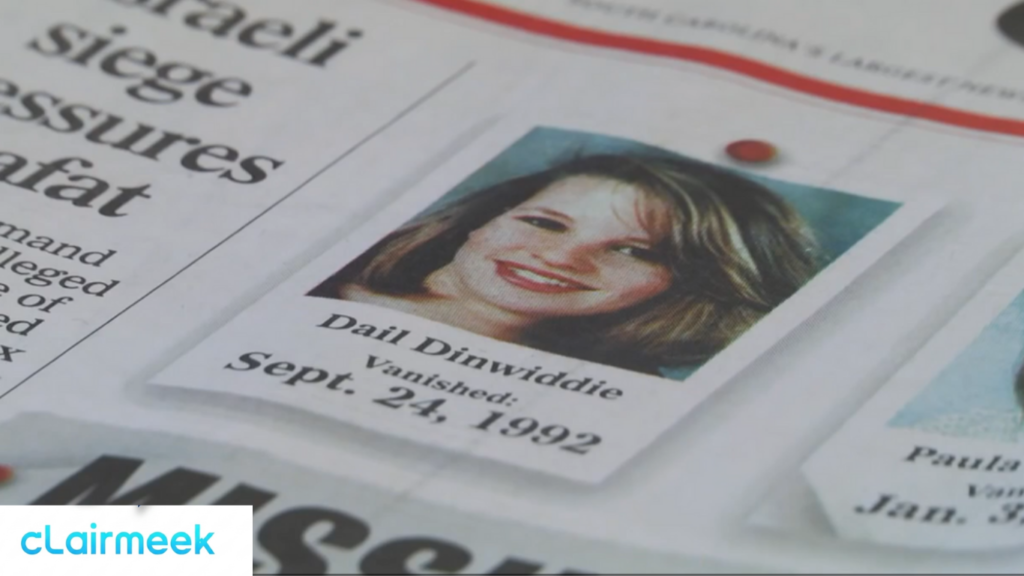
- Physical description: White female, light brown hair with blonde highlights, brown eyes, dimples, pierced ears; stood approximately five feet tall and weighed only 98 pounds
- Notable characteristic: One finger on each hand was slightly curved — a distinguishing physical feature
- Health condition: Dinwiddie had severe asthma and allergies and required twice-weekly injections and the use of an inhaler to control her condition.
Those who knew her described her as cautious, thoughtful, and responsible — characteristics that made her sudden disappearance all the more alarming to those closest to her.
The Night Dail Dinwiddie Vanished
On the evening of September 23, 1992, Dail Dinwiddie was doing what thousands of young people do every weekend — she was out having a good time with her friends. Nobody could’ve guessed it would be the last night anyone would see her.
On September 23, 1992, the Irish rock band U2 brought its “Zoo TV” tour to Williams-Brice Stadium. It was a big deal that a band of that stature was performing in Columbia. It drew out tens of thousands of people. Dail, naturally, had to be there.
After the concert ended at approximately 11:15 p.m. EDT, Dinwiddie and her friends went to Jungle Jim’s — a nightclub in Five Points that closed down in early 2012. Five Points, for those unfamiliar with Columbia’s geography, is a hip, lively district just east of the city center — popular with students from the nearby University of South Carolina.
Here’s a timeline of those critical early morning hours:
| Time | Event |
| 11:15 PM (Sept. 23) | U2 concert ends at Williams-Brice Stadium |
| ~11:30 PM | Dail and friends head to Jungle Jim’s in Five Points |
| ~1:00 AM (Sept. 24) | Dail’s friends leave the club, assuming she found a ride home |
| ~1:15 AM | Dail asks a bouncer at Jungle Jim’s if he has seen her friends |
| ~1:30 AM | Dail is last seen leaving the bar, walking north on Harden Street |
| 6:15 AM | Dail’s father notices her bed hasn’t been slept in |
| 8:30 AM | Dail’s father reports her missing to Columbia Police |
Dinwiddie was missed at 6:15 a.m. when her father saw that the lights and radio were on in her room and her bed had not been slept in. He called all of her friends and none of them knew her whereabouts, so he reported her missing at 8:30 a.m.
Just like that — in the space of a few hours on an ordinary Wednesday night — Dail Dinwiddie was gone.
Five Points: The Scene of a Mystery
To truly understand the Dail Dinwiddie case, you’ve got to appreciate the setting. Five Points is a hip dining and shopping district located just east of Columbia’s city center. At night, its bars become a hub of the city’s nightlife scene — not to mention a favorite drinking destination of students at the nearby University of South Carolina.
Back in the early 1990s, it was still considered a relatively safe environment. There were no widespread surveillance cameras blanketing the streets. There was no digital trail to follow — no cell phone pings, no social media check-ins, no credit card transactions after she walked out that door. Dail stepped out into the night and simply ceased to exist in any traceable way.
The brown-eyed, brown-haired Dinwiddie — standing all of five feet and weighing only 98 pounds — left the bar walking north on Harden Street wearing a forest green outfit.
Police believe she was kidnapped — and have suggested it was likely a carefully planned abduction considering the lack of witnesses or evidence connected to her disappearance. There was literally no crime scene. Dinwiddie just “vanished,” in the words of former solicitor Dick Harpootlian, whose office worked the case.
The Investigation: Hundreds of Leads, Zero Answers
The investigation into the disappearance of Dail Dinwiddie has been one of the most extensive missing persons searches in South Carolina history. And yet, frustratingly, it remains unsolved.
Police followed more than 1,000 leads. With no crime scene, there are few clues for investigators to evaluate. Detectives didn’t just sit behind desks, either — they went out and physically searched.
The search has led investigators to dig up bones that proved to be from a deer, check properties with ground-penetrating radar, tear up a floor at a Five Points home to find the cause of a foul odor, and pull a car from a pond in Lower Richland at the suggestion of clairvoyants.
- Columbia Police Department (CPD) — initially led the investigation and maintained cold case detectives on the file
- Richland County Sheriff’s Department (RCSD) — joined the investigation and continues to work the case actively
- South Carolina Law Enforcement Division (SLED) — state-level investigators who have contributed resources and expertise
Authorities say hundreds of leads have come in over the years. Columbia Police, the Richland County Sheriff’s Department, and the South Carolina Law Enforcement Division (SLED) all continue to work the case.
That’s a community refusing to give up.
Suspects and Persons of Interest in the Dail Dinwiddie Case
Over the years, several names have come up in connection with the Dail Dinwiddie investigation.
Reinaldo Javier Rivera
Perhaps the most prominent name connected to this case is Reinaldo Javier “Ray” Rivera. Rivera admitted to murdering four Georgia women, but is a suspect in many more deaths. A native of Puerto Rico, he was a resident of Columbia and a student at the University of South Carolina in 1992.
While he admitted to those killings, he never admitted to having any connection to Dail, and investigators never found any evidence. Rivera’s connection to the case ultimately did not bear fruit.
The James Campbell Theory
More recently, a theory emerged involving a man named James Adolph Campbell. According to this account, cold case investigators have confirmed that — while there is nothing to indicate the tale is true — they are nonetheless following up on the lead.
The “Wrong Girl” Theory
One particularly chilling theory holds that Dail Dinwiddie may have been taken by mistake — a case of mistaken identity. There was an age difference, as Dail Dinwiddie was 23 years old while another woman, the alleged actual target of the abduction, was 28 years old at the time.
But they illustrate just how many directions this investigation has taken over more than three decades.
The Family’s Unbreakable Spirit
If there’s one truly awe-inspiring element of the Dail Dinwiddie story, it’s the sheer, unwavering determination of her family. They haven’t stopped. They won’t stop. And that, frankly, is nothing short of remarkable.
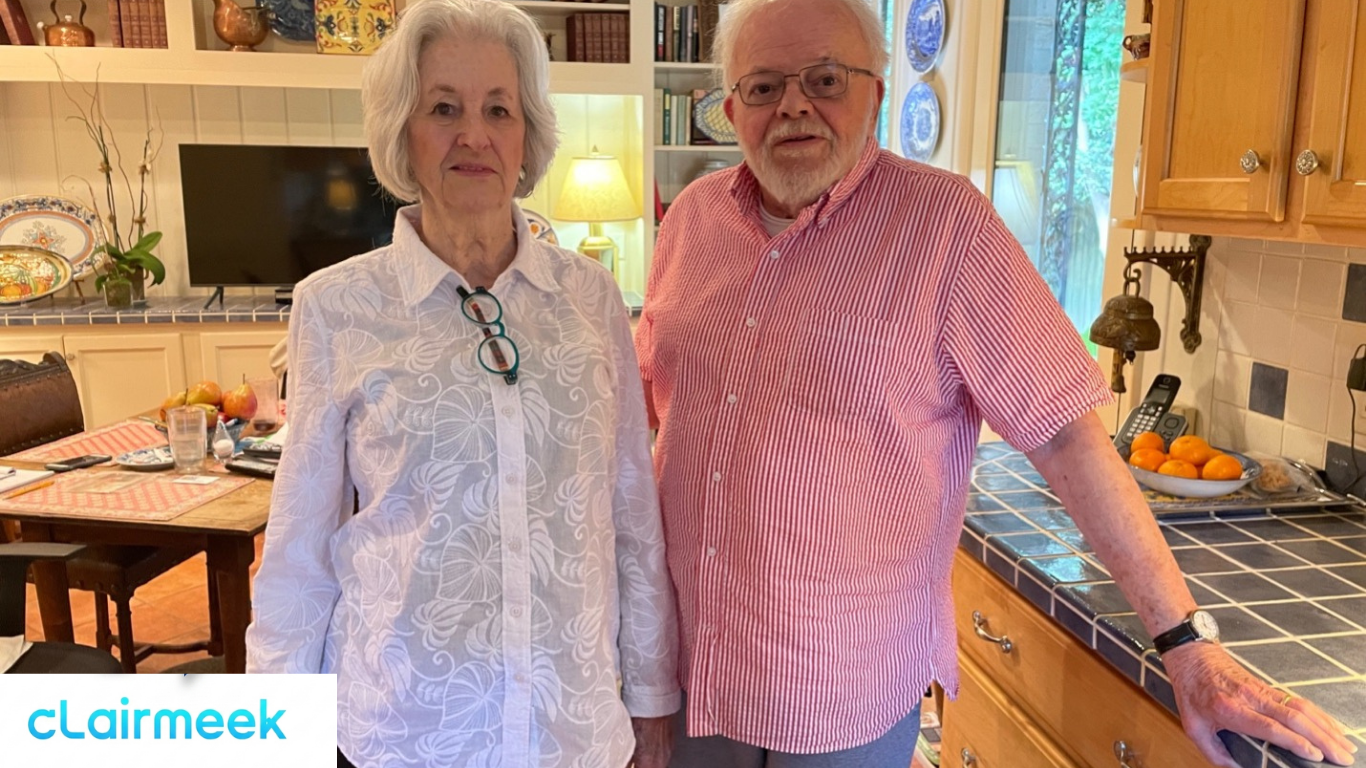
Her father Dan, now passed away, once said poignantly: “We don’t have any of Dail’s children, grandchildren. We miss all of that.”
Dail’s younger brother Drew was just 16 at the time. Now raising kids of his own, he still feels the absence of a sister who should be here.
His plea is simple and heartbreaking: “It’s OK that it took you this long. But the answer’s got to come to light. Please come forward.”
Dail’s friend Amy Myers, through tears, has said: “Dail’s mother is in her mid-80s and I plead to you all that she gets disclosure before she passes, that she gets these answers.”
33 years later, so much has changed for the Dinwiddie family. Their father has passed. Their mother’s health is failing. But one thing has never changed: the fight for answers.
Law Enforcement’s Commitment to the Dail Dinwiddie Case
It’s not just the family who refuses to let go. Law enforcement has demonstrated a truly commendable commitment to solving this case — even as the years stretch on.
That’s not just a job — that’s a personal commitment. “All cops have one case that haunts them. For me, it’s this one,” Sheriff Lott said. “As a parent of four daughters, understanding the pain that they’re going through.”
Detective Kevin Isenhoward has been by the family’s side, filling them in on every new lead. “If you could imagine the rollercoaster ride that their emotions have been on for this entire time. Every time they get a call like that, every time they get a tip, they go through it again, and they reach out. They get their hopes up,” he said.
In 2025, new developments kept the case active. Cold case investigators confirmed they are following up on a new lead. “We have taken the information provided seriously and have been actively following up on it,” said Master Deputy Allie Salrin, RCSD public information officer. “Dail Dinwiddie’s case continues to be an active investigation for our Cold Case unit.”
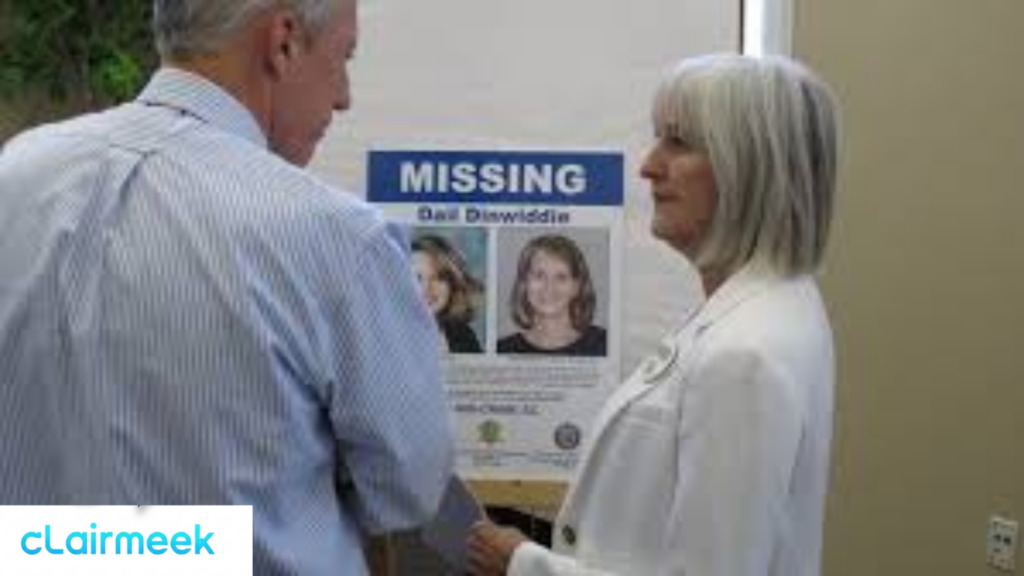
Media Coverage and Public Awareness
Her face has appeared on posters, billboards, television broadcasts, podcasts, and online platforms for over three decades.
Inside Andy’s Deli in Columbia, three posters still hang on the wall. They’ve been there for 33 years, asking if anyone knows what happened to 23-year-old Dail Dinwiddie. That image alone — those weathered posters in a diner — speaks volumes about how deeply this community has held on to her memory.
The Deck podcast, produced by audiochuck, featured Dail’s case as a card in their series dedicated to unsolved cold cases, reaching a massive national true crime audience. The podcast team photographed Dail’s investigative file at Columbia Police headquarters and sat down for interviews with her parents, Dan and Jean Dinwiddie.
Why does media coverage matter in cases like this? Because cold cases are, quite often, solved by a tip from someone who heard a story, recognized a name, or finally decided to speak up years after the fact. Every podcast listener, every newspaper reader, every person who shares Dail Dinwiddie’s photo online is a potential link in the chain that could bring this case to resolution.
The Reward and How You Can Help
One of the most practical and direct ways the public can contribute to solving the Dail Dinwiddie case is by coming forward with information — and there’s a significant financial incentive to do so.
A $50,000 reward remains available for information that could help solve Dail’s case.
If you have any information — no matter how minor it might seem — here’s what to do:
- Call Crime Stoppers: 1-888-CRIME-SC (anonymous tips accepted)
- Contact the Columbia Police Department or the Richland County Sheriff’s Department directly
- NamUs Case Number: MP262 — you can submit tips through the National Missing and Unidentified Persons System online
“Somewhere, somebody knows where Dail is or what happened to her,” her father Dan once said. The Dinwiddies also hope Dail’s story will remind young people to be more thoughtful and careful when they go out places and in their everyday lives because they don’t want any other families to face the heartache they have.
That message rings just as true today as it did in 1992.
The Broader Significance of the Dail Dinwiddie Case
The disappearance of Dail Dinwiddie is, at its core, a deeply personal tragedy for one family. But it also carries a broader significance that extends far beyond Columbia, South Carolina.
Her case highlights several important issues:
- The limitations of pre-digital investigations: In 1992, there were no cell phones, no GPS tracking, no surveillance cameras on every corner. Investigators worked with almost nothing.
- Community solidarity: The way Columbia has rallied around the Dinwiddie family for over three decades is a powerful reminder that communities can hold each other up through unimaginable grief.
- The emotional toll on families: Drew Dinwiddie told reporters that after years of hoping, the family has accepted that Dail may no longer be alive. “Do I think she’s probably passed away? Yes. Does it feel comfortable to speak about her in the past tense? No,” he said. “It’s just — we just don’t have the closure.”
- The need for witnesses to speak: “I just wish the person or people who know something would come forward. It’s gotta be heavy on their chest,” Drew said.
Conclusion
More than three decades have passed since Dail Dinwiddie walked out of Jungle Jim’s nightclub on a warm September morning and stepped into a mystery that has never been solved. The world has changed enormously since then. The nightclub she visited is long gone. Her father has been buried in a cemetery — next to an empty grave meant for her. Her mother’s health is failing. And yet the search continues.
The Dail Dinwiddie case is not over. It is very much alive — in the hearts of her family, in the files of dedicated law enforcement officers, in the memories of a community that refused to move on without answers. If you know anything at all about what happened to Dail Dinwiddie, the time to speak is now. A family is waiting. A mother — now in her eighties — is waiting. And justice, however long it takes, is still worth fighting for.
FAQs
Has anyone ever been charged in the Dail Dinwiddie case?
No. Despite over 1,000 leads and multiple persons of interest being investigated over the years, no one has ever been formally charged in connection with Dail’s disappearance. The case remains an active investigation.
Is there a reward for information about Dail Dinwiddie? Yes. A $50,000 reward remains available for information that could help solve Dail’s case.
What was Dail Dinwiddie’s NamUs case number?
Her NamUs missing person case number is MP262, and she went missing from Columbia, South Carolina, with a date of last contact of September 24, 1992.
Is the Dail Dinwiddie case still being investigated? Absolutely. Dail Dinwiddie’s case continues to be an active investigation for the Richland County Cold Case unit, and as recently as 2025, new leads are still being pursued by investigators committed to bringing answers to her family.