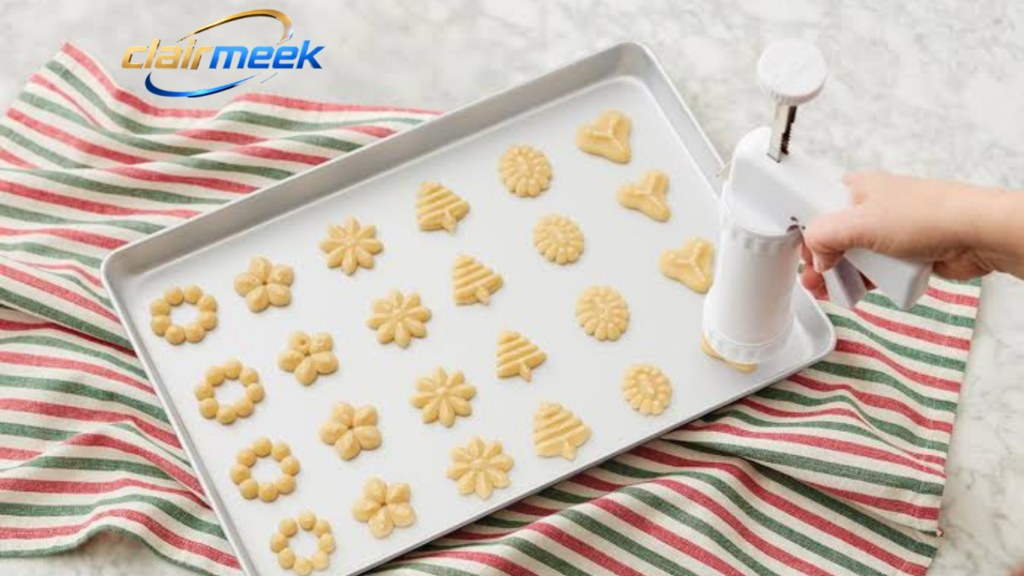

Few kitchen tools evoke the warmth of holiday baking quite like the spritz cookie press. This simple yet ingenious device turns soft, buttery dough into delicate, shaped biscuits that melt on the tongue. For generations of home bakers, especially around Christmas, the spritz cookie press has been the secret to rows of uniform stars, trees, wreaths and flowers emerging with satisfying ease.
Its charm lies in both practicality and nostalgia. The name itself comes from the German verb spritzen, meaning “to squirt,” a perfect description of how the dough is forced through patterned discs. Whether you grew up watching a parent or grandparent load the familiar aluminium cylinder or have only recently discovered modern versions, the spritz cookie press continues to hold a special place in kitchens across Britain and beyond.
Interest in the tool remains strong because it delivers consistent results that freehand piping or cutters cannot always match. It also connects contemporary bakers to older European traditions of festive baking that travelled across the Atlantic and then returned, refined by American manufacturing ingenuity.
Early Origins and Background
The roots of the spritz cookie and its associated press stretch back to northern Europe. Food historians link early forms of these buttery biscuits to 16th-century Germany and Scandinavia, where bakers sought efficient ways to produce decorative treats for Christmas and other celebrations. Soft doughs rich in butter were forced through rudimentary tools to create uniform shapes, a technique that evolved from pastry bags and simple extrusion devices.
In Germany the biscuits became known as Spritzgebäck. Similar versions appeared in Sweden and other Scandinavian countries under names such as spritsar or spritsa kakor. Immigrants carried the recipes and basic tools to North America in the 19th and early 20th centuries. By the 1700s, related presses for fancy cakes and biscuits had already appeared in colonial American households.
The modern handheld cookie press gained widespread traction during the 1930s. The Great Depression encouraged manufacturers to design affordable, efficient kitchen gadgets that helped households stretch ingredients and produce impressive results. Around 1930–1935 the Mirro Aluminum Company of Manitowoc, Wisconsin—already a major producer of cookware—introduced a screw-driven piston model that became iconic. Lightweight, durable aluminium construction and interchangeable discs featuring holiday motifs made the Mirro press a household staple through the post-war decades.
Other makers followed. Nordic Ware produced the Cookie King in the early 1960s, aimed partly at Minnesota’s large Scandinavian population. These tools turned what had once been a specialised confectioner’s technique into an accessible home activity.
Rise to Popularity and Everyday Use
The spritz cookie press truly flourished in the mid-20th century as butter, sugar and refined flour became more readily available again after wartime rationing. Spritz cookies themselves—essentially a rich shortbread-style dough flavoured with vanilla or almond extract—proved ideal for the press. The soft consistency flows cleanly through the discs and holds intricate shapes during baking without spreading excessively.
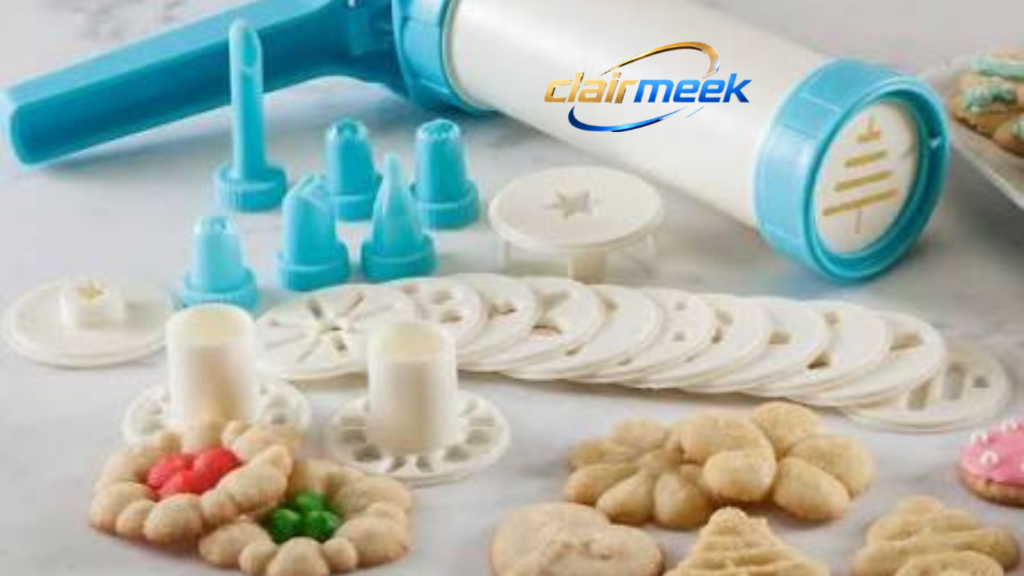
Typical construction remains straightforward: a hollow barrel holds the dough, a plunger or ratchet mechanism applies pressure, and a disc at the base determines the shape. Vintage models often rely on a twisting handle; many contemporary versions use a trigger or lever action similar to a caulk gun. Popular discs include Christmas trees, snowflakes, stars, flowers, wreaths and simpler geometric patterns.
Major milestones include the mass production of Mirro presses that filled department-store shelves and the later introduction of plastic and stainless-steel models by brands such as Wilton, OXO and Marcato. These newer designs improved ergonomics, ease of cleaning and consistency of portion size. Collaborations between cookware makers and recipe developers helped popularise the tool further, with many cookbooks of the 1950s and 1960s featuring dedicated spritz sections.
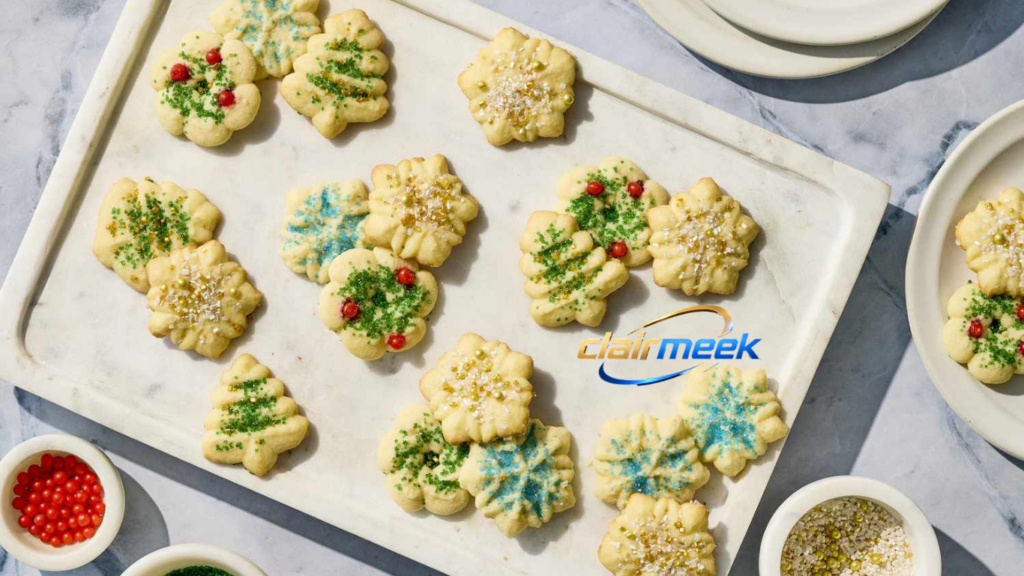
Public reputation centres on reliability and festive cheer. Bakers appreciate the speed with which large batches can be produced—useful when filling tins for gifts or parties. The press also encourages creativity: dough can be tinted, sprinkled or finished with small pieces of candied fruit or chocolate.
Practical Challenges and Tips for Success
Like many specialised tools, the spritz cookie press has its quirks. Success depends heavily on dough temperature and consistency. Too warm or soft and the shapes blur; too cold or firm and the press jams. Experienced bakers recommend keeping unused dough chilled and working on cold, ungreased baking sheets so the extruded biscuits adhere properly rather than lifting with the press.
Cleaning presents another consideration. Vintage aluminium models often have multiple small parts that require careful washing by hand. Modern designs with fewer crevices and dishwasher-safe components address this drawback, though thorough drying remains important to prevent residual dough from hardening.
Setbacks such as uneven pressure or air pockets in the barrel are common for beginners. The solution is usually simple: load the dough firmly in log form, prime the mechanism until dough emerges evenly, and practise the lift-and-press motion. Many users find that a short learning curve yields reliable results thereafter. The resilience of the tool itself—especially sturdy metal versions—means well-maintained presses often last decades and become family heirlooms.
Cultural Place and Contemporary Role
While the spritz cookie press has no “personal life” in the human sense, it occupies a warm place in domestic culture. It appears regularly in holiday baking traditions on both sides of the Atlantic. In Britain it sits comfortably alongside other specialised tins and cutters used for seasonal biscuits. Families pass down favourite discs and accompanying recipes, sometimes adapting them with local flavours such as citrus zest or spices.
Public statements about the tool tend to emphasise practicality and pleasure rather than glamour. Cooking writers and bakers frequently note that a good press removes the intimidation factor from producing professional-looking results at home. Vintage examples occasionally surface at auctions or specialist retailers, sought by collectors of mid-century kitchenware as much as by active bakers.
Later Developments and Current Use
Today the spritz cookie press continues to appear in well-equipped kitchens and seasonal gift lists. Contemporary models from OXO, Wilton and others feature ergonomic grips, clear barrels for monitoring dough levels, and sets of a dozen or more stainless-steel discs. Some combine functions, allowing the same barrel to produce churros or piped icing. Higher-end stainless-steel versions from makers such as Marcato appeal to frequent users seeking durability.
Recent work focuses on accessibility and ease. Instructional videos and recipe sites offer detailed guidance on dough preparation and technique, helping new users avoid common pitfalls. The tool also features in discussions of sustainable kitchen practices: a long-lasting press reduces reliance on single-use moulds or disposable piping bags.
Charity bake sales, community Christmas events and school cooking sessions often showcase spritz cookies, keeping the tradition visible. Online marketplaces sustain interest in both new and refurbished vintage presses, ensuring the design remains available to successive generations.
Quick Bio
| Detail | Information |
| Full Name | Spritz Cookie Press (also Cookie Gun / Spritz Maker) |
| Approximate Origin | 16th-century Europe; modern form 1930s USA |
| Place of Popularisation | Manitowoc, Wisconsin (Mirro) and wider North America |
| Nationality / Style | European tradition refined by American manufacturing |
| Profession / Use | Kitchen tool for extruding shaped biscuits |
| Years Active | 1930s–present |
| Known For | Uniform decorative spritz cookies, especially festive shapes |
| Typical Materials | Aluminium, stainless steel, plastic |
Legacy and Lasting Impact
The spritz cookie press remains important because it democratised a once-specialised technique. It allowed ordinary households to produce attractive, consistent biscuits without professional training. Its influence on home baking is visible every December in kitchens filled with the scent of butter and vanilla, trays of tiny trees and stars cooling on the side.
Conclusion
Public perception balances practicality with sentiment. Many bakers associate the tool with family rituals and the quiet satisfaction of a well-filled tin. Lessons from its history include the value of simple mechanical design, the role of affordable manufacturing in spreading culinary traditions, and the enduring appeal of food that is both beautiful and straightforward to share.
In an era of elaborate equipment and endless recipe variation, the spritz cookie press stands as a reminder that thoughtful tools can enhance rather than complicate the pleasures of baking.